Worry Tree
6 - 22 November 2020
Backwoods Gallery, Naarm, Melbourne
The Worry Tree is a Cognitive Behavioural Therapy tool that helps people to manage worrying thoughts, particularly worst-case-scenario worrying and anxiety where there is little or nothing we can do about the situation. The Worry Tree is a way of conceptualising ‘Imagined future’ scenarios where we feel powerless, distinguishing if the worry comes from a real event or hypothetical event.
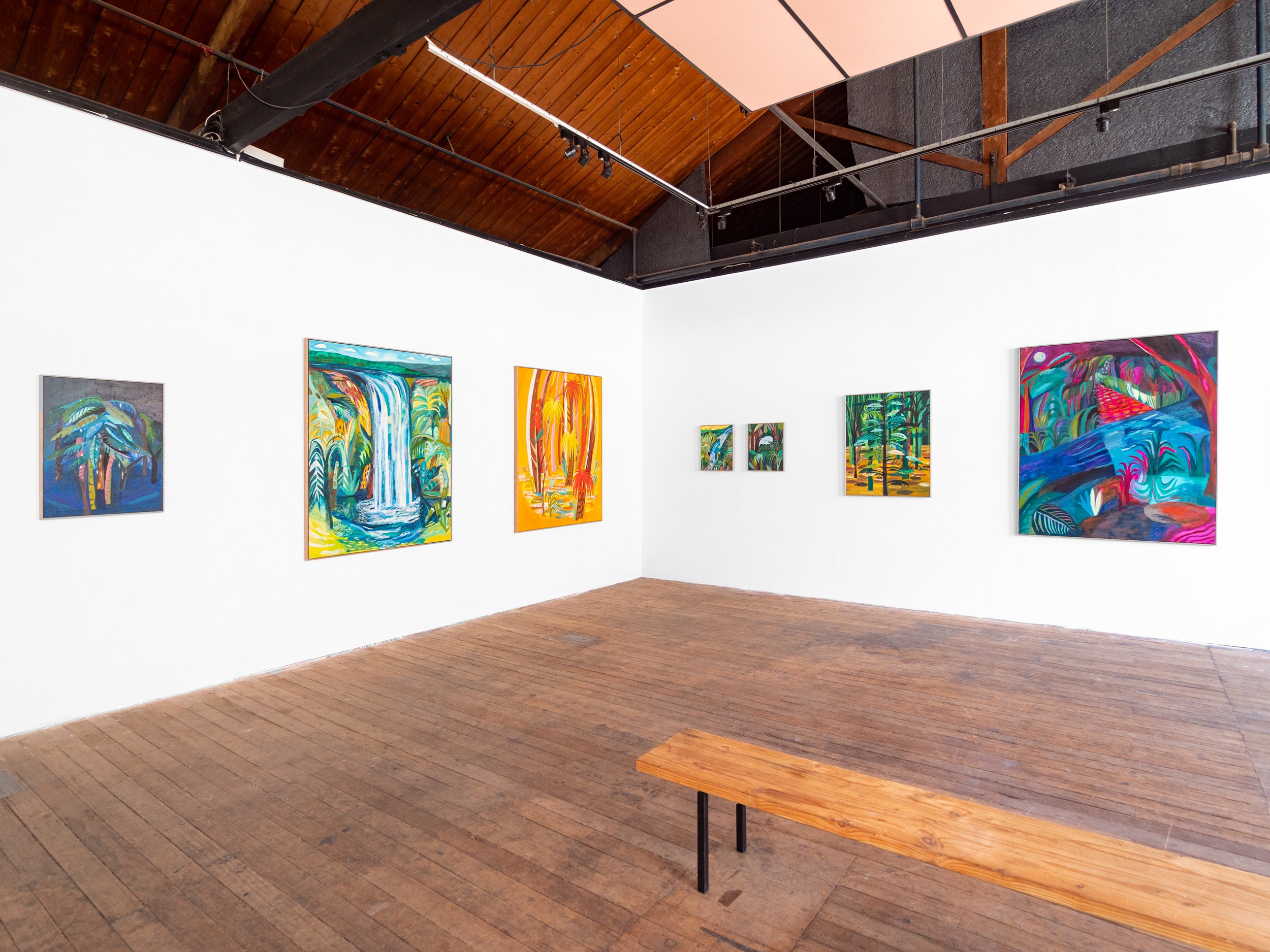
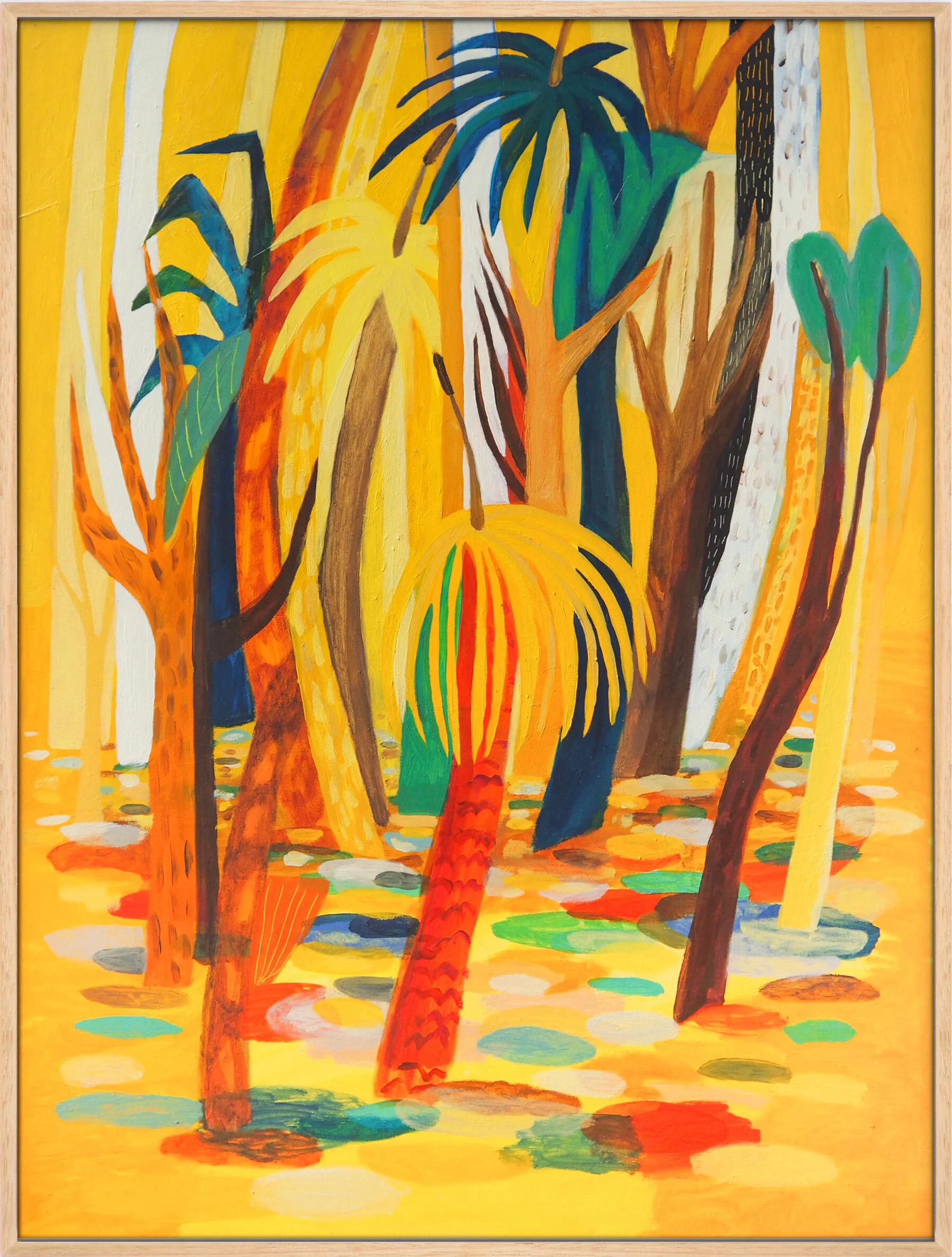
Ellie Hannon’s latest collection of work “Worry Tree” traces the tension between the desire to be immersed in and at-one with nature and alienation from the natural world. Continuing her investigation into the way our interaction with the environment shapes our personal and collective identities, in this series Hannon positions herself as a voyeur of nature - gazing in on a space that feels separate to us, but which we yearn to be part of; a world that is both the basis of all human life, but increasingly at the mercy of it.
The Worry Tree system that psychologists use to help people identify the problems over which they might exert some control and those over which they have none seems, in the current era, at once pragmatic and shocking. The existential fear that plagues so many is rarely diminished by the notion that we are powerless. And so, we search the earth’s surface for solace. As we begin to see the natural world around us degrade, many attempt to establish a deeper personal connection with nature in order to separate ourselves, if only psychologically, from a culture that objectifies nature as solely a resource. ‘Losing ourselves’ in nature in order to escape the world in which we live, love and toil. This relationship often feels deeply personal and unique. But we always have one foot in either world, to the extent that, at times, we feel cleaved down the middle - pulled in either direction, anxiously grappling with this sharpening contradiction.
But in each landscape, Hannon also finds hope. Within each waterfall, each bed of fallen leaves, she glimpses the potential for harmony between the human and more than human worlds. By helping us to meditate upon a scene with her, she presents the possibility of widening the frame from an individual connection with nature, to a social one, where the dichotomy of human/nature is broken down and the relationship becomes reciprocal and mutually enriching. Hannon draws us in, if only for a moment, to sit beside her and gaze at these natural wonders, not as spectacles, but landscapes whose fate is intimately bound up with our own.
Exhibition words by Caitlin Doyle Markwick